Revision Ear Surgery: A Patient’s Journey from Hearing Loss to Recovery
Undergoing ear surgery once can be a difficult experience. Being told that you may need revision ear surgery after the first operation can be even more worrying.
Patients often have understandable concerns: Why has the problem returned? Will another surgery work? Will my hearing improve? Is another operation really necessary?
This patient’s experience illustrates the journey of someone who developed persistent ear discharge, a recurrent hole in the eardrum and hearing loss after previous ear surgery, and eventually underwent successful revision treatment.
When Ear Problems Return After Previous Surgery
The patient had undergone ear surgery previously but continued to experience ear discharge and hearing loss afterwards.
Further evaluation by other doctors confirmed that there was again a hole in the ear. Hearing tests also demonstrated hearing loss, and repeat surgery was recommended.
Understandably, the patient was afraid of undergoing another operation.
Rather than immediately agreeing to another procedure, the patient began looking for an experienced ear surgeon and eventually contacted my clinic after coming across my profile while searching for a BestEarsurgeon.
Making the Decision for Revision Ear Surgery
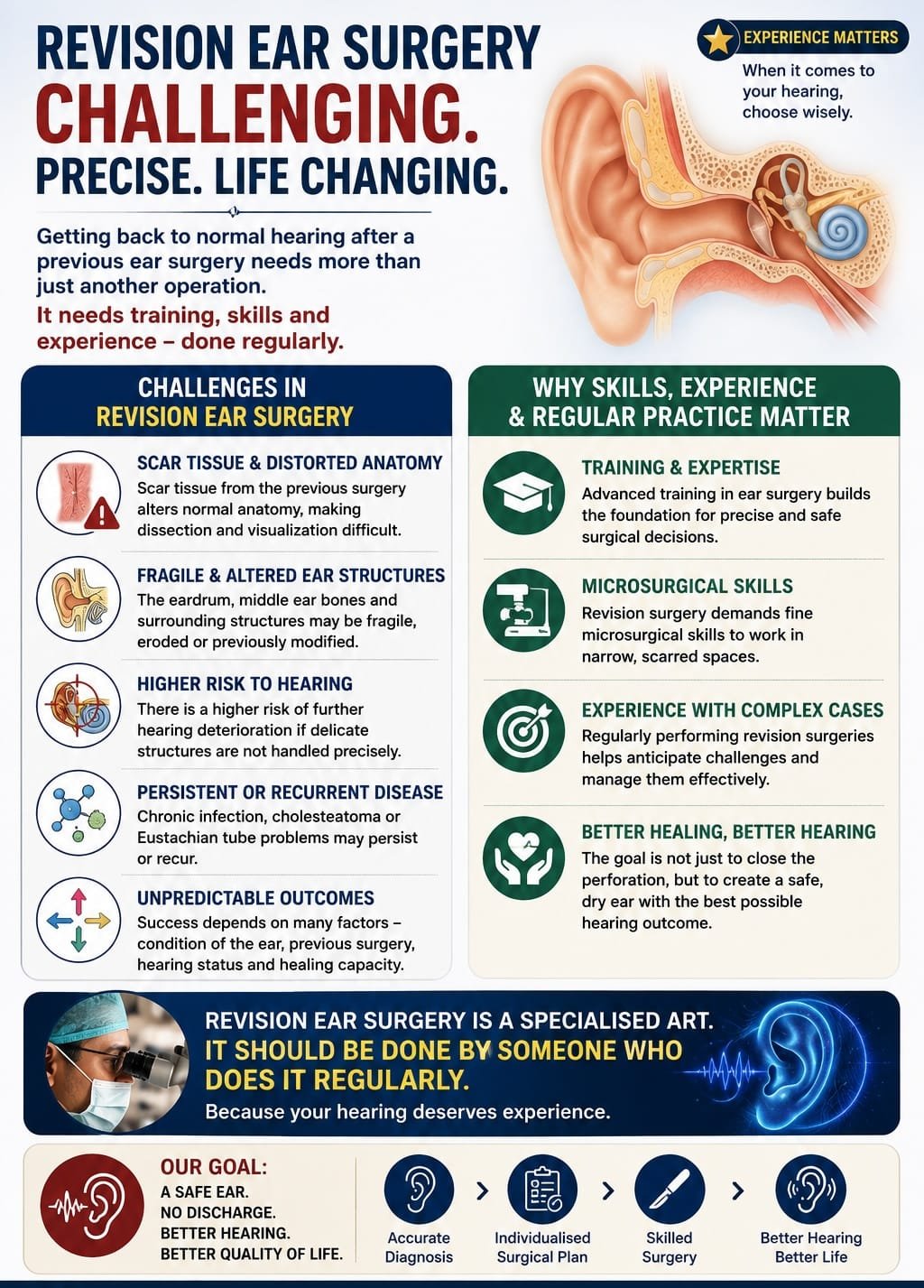
One of the most important aspects of revision ear surgery is understanding why the original problem has persisted or returned.
A patient who has already undergone surgery may naturally have many questions and concerns. Detailed evaluation, appropriate hearing tests and an explanation of the available treatment options are therefore important before deciding on further surgery.
In this case, the patient describes being reassured by the consultation, including an explanation of the problem, the proposed surgery, its potential benefits and its possible risks.
After discussing the condition and treatment plan, the patient decided to proceed with revision ear surgery.
The Surgery and Recovery
According to the patient’s testimonial, the surgery lasted approximately three hours and was performed at a reputed hospital in Bangalore.
The patient was able to return home the same evening, rather than requiring a prolonged hospital stay.
After surgery, appropriate medicines and postoperative care were provided. The patient was also given specific instructions regarding precautions and care during the following months.
This part of recovery is important.
Ear surgery does not end when the operation is over. Healing takes time, and following postoperative instructions can be an important part of achieving the desired outcome.
The patient followed the recommended precautions and treatment plan during recovery.
Hearing Returned to a Level That Made a Difference
The most meaningful part of this patient’s story was not simply that the ear healed.
It was the improvement in hearing.
The patient reported that hearing had returned to a normal level and that even soft sounds and whispers could be heard again.
For someone working in the call industry, hearing is not merely a convenience. It is essential to communication and employment.
The patient described the improvement as having a major impact on both quality of life and the ability to continue working.
A Patient’s Experience in Her Own Words
After nearly two years following treatment, the patient wrote to share that the improvement had continued and that she was still doing very well.
She expressed gratitude for the treatment, the explanations provided before surgery, the postoperative care and the reassurance received throughout the process.
She particularly appreciated having her doubts addressed patiently and being guided through the treatment and recovery process.
Revision Ear Surgery Requires Individual Assessment
Every patient who has undergone previous ear surgery is different.
Persistent ear discharge, a recurrent eardrum perforation or hearing loss after previous surgery may have different underlying causes. The decision regarding revision ear surgery therefore requires careful assessment rather than assuming that every patient needs the same procedure.
Hearing evaluation and examination of the ear help determine the nature and extent of the problem and guide treatment planning.
The patient’s message
The patient concluded her testimonial by expressing her gratitude for what she described as receiving her hearing, life and job back.
Her experience is a reminder that needing another operation after previous ear surgery can be frightening, but it does not necessarily mean that there is no solution.
The right diagnosis, appropriate surgical planning and careful postoperative follow-up can make an important difference.
This is an individual patient’s experience. Surgical outcomes vary between patients and depend on the underlying ear condition, previous surgery, hearing status and several other individual factors.