Is It ADHD or Pediatric Sleep Apnea? When Poor Sleep Looks Like a Behaviour Problem
A child who is constantly restless, inattentive, impulsive or unable to sit still is often assumed to have ADHD (Attention-Deficit/Hyperactivity Disorder). But there is another important possibility that parents should not overlook: pediatric sleep apnea.
One of the less recognised causes of ADHD-like behaviour in children is sleep-disordered breathing, particularly when enlarged adenoids or tonsils interfere with normal breathing during sleep.
This does not mean that every hyperactive child has sleep apnea, or that ADHD is caused by enlarged adenoids. ADHD is a recognised neurodevelopmental condition. However, chronic sleep disruption can produce very similar problems with attention, behaviour, learning and emotional regulation—and in some children, both conditions may be present.
Why Can Sleep Apnea Make a Child Hyperactive?
Adults who are sleep deprived commonly become sleepy and sluggish. Children can respond differently.
When sleep is repeatedly interrupted by partial or complete obstruction of the upper airway, a child may experience frequent brief arousals that may not be obvious to parents. The child may therefore receive inadequate restorative sleep even after spending an apparently normal number of hours in bed.
The result can include:
- Difficulty paying attention
- Poor concentration at school
- Irritability and mood changes
- Impulsive behaviour
- Hyperactivity or constant fidgeting
- Difficulty controlling emotions
- Problems with learning and memory
- Daytime sleepiness or fatigue
This overlap is why pediatric sleep apnea can sometimes look like ADHD.
Enlarged Adenoids and Tonsils: A Common Cause of Sleep-Disordered Breathing
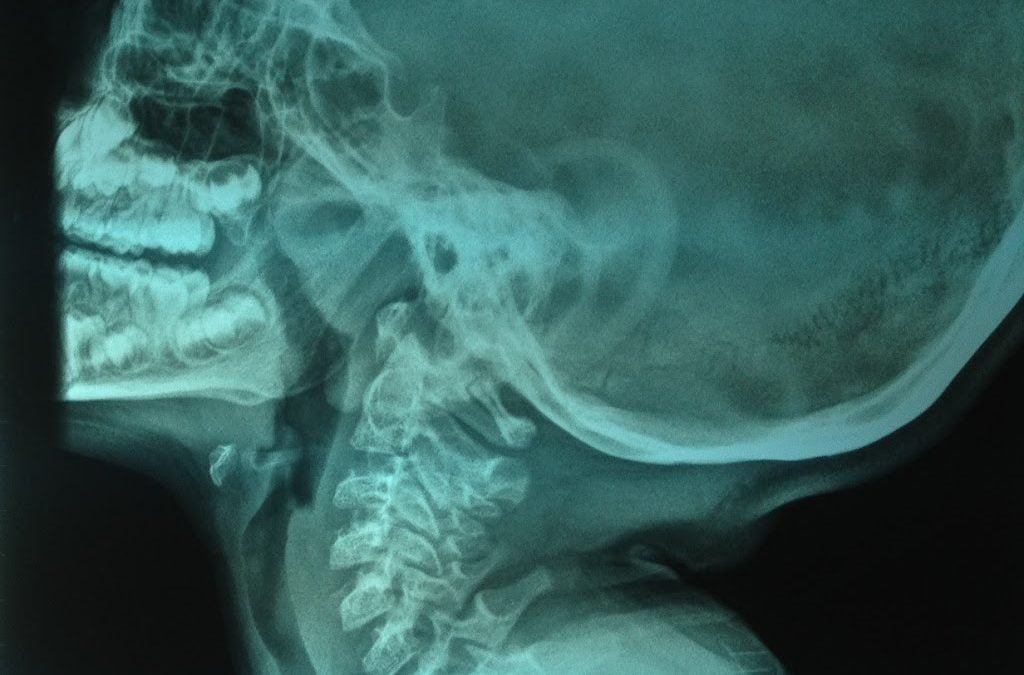
The adenoids are lymphoid tissue located behind the nose. In children, they can become enlarged and contribute to blockage of the nasal airway. Enlarged tonsils can also narrow the throat.
When enlarged adenoids and tonsils obstruct the airway during sleep, the child may develop obstructive sleep apnea (OSA) or other forms of sleep-disordered breathing.
You can read more about tonsils and adenoids.
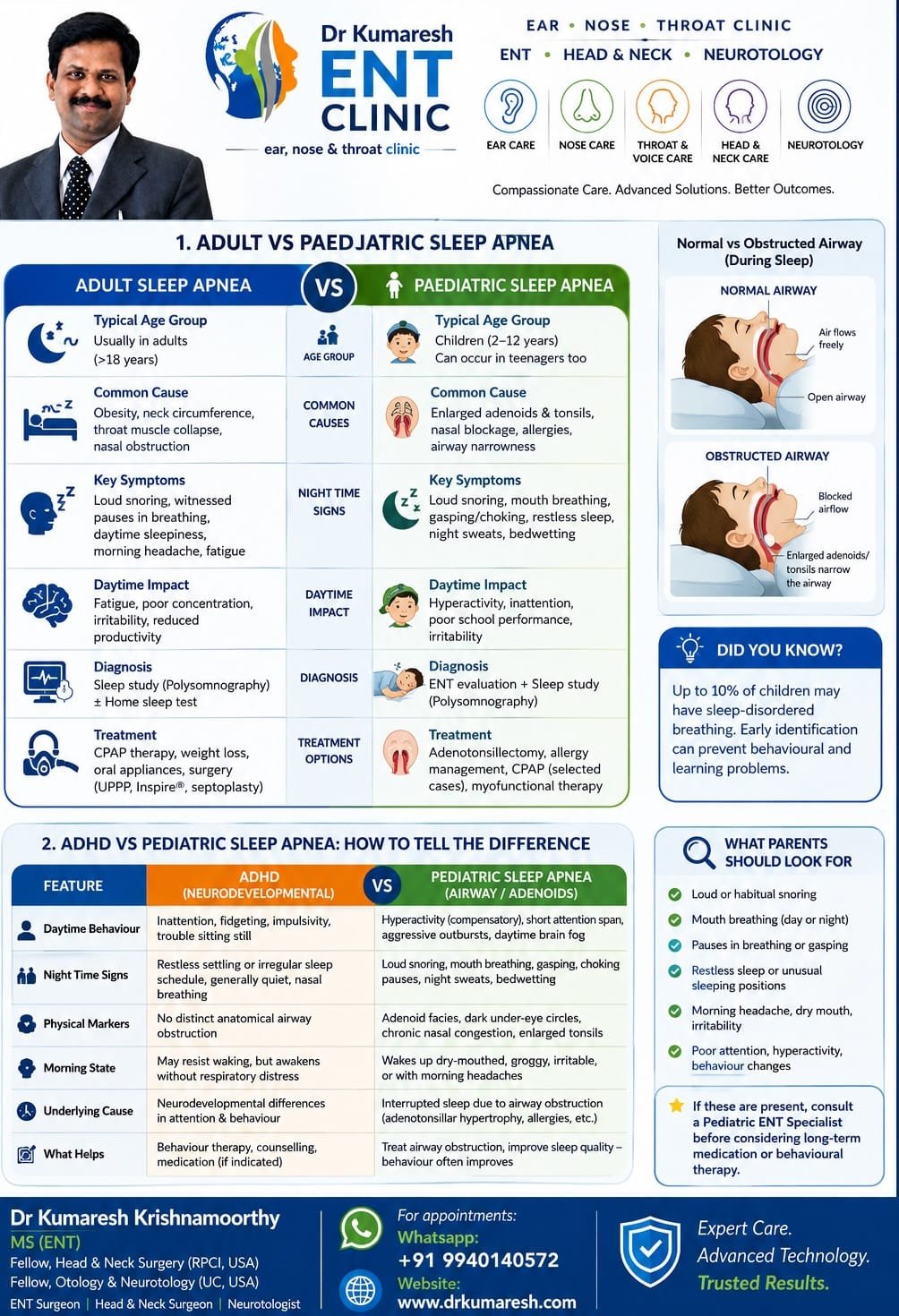
ADHD vs Pediatric Sleep Apnea: What Should Parents Look For?
There is considerable overlap between the two conditions, so symptoms alone cannot establish a diagnosis. However, certain clues should make parents think about sleep-disordered breathing.
| Feature | ADHD | Pediatric Sleep Apnea / Sleep-Disordered Breathing |
|---|---|---|
| Attention | Persistent difficulty sustaining attention | Poor concentration may result from fragmented sleep |
| Behaviour | Impulsivity, hyperactivity and difficulty sitting still | Irritability, impulsivity and hyperactivity can occur |
| Sleep | Sleep problems may occur, but are not necessarily related to airway obstruction | Snoring, mouth breathing, restless sleep or breathing pauses are important clues |
| Breathing | Usually no characteristic obstructed breathing pattern | Gasping, choking, pauses or laboured breathing during sleep |
| Nose | No characteristic nasal obstruction | Chronic nasal blockage and mouth breathing may be present |
| Tonsils/adenoids | No specific enlargement required | Enlarged tonsils and/or adenoids may contribute to obstruction |
| Morning | May have difficulty waking or establishing routines | May wake with dry mouth, headache, irritability or remain unrefreshed |
| Daytime sleepiness | Not usually the defining feature | May occur, although children may instead appear hyperactive |
The Most Important Question: How Does Your Child Sleep?
If a child has significant behavioural or attention problems, ask yourself what happens after the child falls asleep.
Look for:
1. Loud or habitual snoring
Occasional snoring during a cold is common. Regular or loud snoring, particularly when accompanied by other symptoms, deserves evaluation.
2. Mouth breathing
A child who consistently sleeps or spends much of the day breathing through the mouth may have nasal obstruction.
3. Pauses in breathing
Parents may notice periods of silence followed by a gasp, snort or change in breathing pattern.
4. Restless sleep
Frequent movement, unusual sleeping positions, sweating or repeated awakenings can accompany sleep-disordered breathing.
5. Morning symptoms
Dry mouth, headache, irritability or difficulty becoming fully alert in the morning may provide additional clues.
6. Daytime behavioural changes
Problems with concentration, impulsivity, irritability or hyperactivity may sometimes be related to inadequate or fragmented sleep.
What Happens If Enlarged Adenoids or Tonsils Are the Problem?
Treatment depends on the cause and severity of the obstruction.
Depending on the child, management may include treatment of nasal or allergic inflammation, observation, medical treatment, or surgery when significant adenotonsillar obstruction is present.
When sleep-disordered breathing is successfully treated, improvements in sleep quality and some daytime behavioural and cognitive symptoms may occur. However, treatment of airway obstruction should not be considered a substitute for an ADHD assessment when ADHD is genuinely suspected.
The Take-Home Message for Parents
Not every hyperactive child has ADHD—and not every child who snores has sleep apnea.
But when behavioural or attention problems occur together with loud snoring, mouth breathing, restless sleep, gasping or pauses in breathing, the child’s sleep deserves careful evaluation.
Sometimes what looks like a behaviour problem during the day is partly a sleep and breathing problem at night.
If your child has persistent snoring, mouth breathing or suspected sleep-disordered breathing, a pediatric ENT evaluation can help determine whether enlarged adenoids, tonsils or another airway problem may be contributing to the symptoms.