Common Cold Symptoms: What to Expect
The common cold is one of the most frequent reasons people miss work or school, yet it’s often misunderstood. While a cold is rarely serious, knowing what to expect can help you manage it with less guesswork—and recognize when your symptoms point to something more than a simple cold.
What Causes a Common Cold?
The common cold is a viral infection of the upper respiratory tract. It spreads through respiratory droplets and contaminated surfaces, which is why colds tend to circulate quickly in households, schools, and offices, especially during colder months.
Common Cold Symptoms
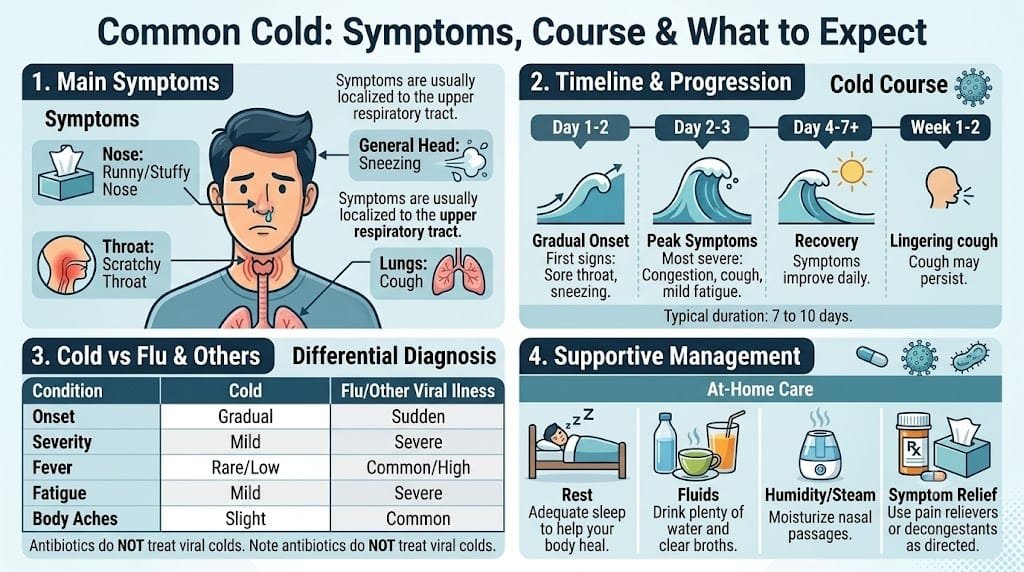
Cold symptoms usually build gradually over a day or two rather than hitting all at once. The most typical signs include:
- Runny or stuffy nose
- Sneezing
- Sore or scratchy throat
- Mild cough
- Fatigue (a classic cold symptom, but typically mild to moderate — you feel run-down, not knocked flat)
- Low-grade fever (more common in children than adults)
- Mild body aches
Symptoms typically peak within two to three days and improve within few days, though a lingering cough can sometimes stick around a bit longer. Fatigue is one of the most consistent cold symptoms, but its severity is what sets it apart from other illnesses — cold fatigue is usually mild enough that you can still get through your day, whereas the sudden, debilitating exhaustion of flu is a different order of magnitude entirely.
How a Cold Differs From Other Illnesses
Because a cold shares symptoms with several other conditions, it’s easy to mistake one for another. A cold tends to come on gradually and stay relatively mild throughout. High fever, severe body aches, and sudden-onset, debilitating fatigue are more typical of the flu. Persistent facial pressure or thick discolored discharge lasting beyond ten days may point to a sinus infection rather than a cold. And a cough paired with wheezing or shortness of breath warrants closer attention, since it could reflect a lower respiratory issue rather than a straightforward cold. When in doubt, the overall pattern and severity of symptoms usually matter more than any single symptom on its own.
Distinguishing a Cold From Other Viral Infections
The cold isn’t the only mild-seeming viral illness going around, and several others overlap closely enough to cause confusion:
- COVID-19 — Can look identical to a cold in mild cases, but is more likely to include loss of taste or smell, and symptoms can occasionally progress further than a typical cold would.
- RSV — Usually looks like a cold in adults, but tends to cause more pronounced coughing and wheezing, and can be more serious in infants and older adults.
- Influenza — As above, distinguished mainly by higher fever, more severe body aches, and a sudden, more debilitating level of fatigue.
Because these viruses can look so similar on the surface, testing is sometimes the only reliable way to tell them apart, especially when symptoms are more pronounced than a typical cold.
Viral vs. Bacterial: Most Likely Cause by Symptom Pattern
Since a cold is viral, antibiotics won’t help — but it’s still useful to know which pattern points toward a bacterial process, since that changes the management:
Feature | More Likely Viral (Common Cold) | More Likely Bacterial |
Onset | Gradual, over a day or two | Often after a viral illness starts improving, then worsens again |
Fever | Low-grade or absent | Higher, more persistent |
Nasal discharge | Clear to whitish, variable | Thick, discolored, and persistent |
Facial/ear pain | Mild or absent | More localized, pressure-like pain (sinuses, ears) |
Fatigue | Mild to moderate | Can be more pronounced, especially with high fever |
Response to rest/fluids | Gradual improvement | Little to no improvement without treatment |
This is a general pattern, not a diagnostic tool — plenty of colds cause thick nasal discharge at some point, and plenty of bacterial infections start mild. A doctor’s evaluation is what actually confirms which is which.
Managing a Common Cold
There’s no cure for the common cold—antibiotics don’t work against it since it’s viral, not bacterial. Treatment is aimed at easing symptoms while your immune system clears the infection. A few things that generally help:
Rest — Giving your body time to recover supports a faster return to normal.
Fluids — Staying well hydrated helps thin mucus and supports overall recovery; this becomes especially important if you’re also dealing with fever or a reduced appetite.
Over-the-counter relief — Decongestants, saline nasal sprays, and pain relievers like acetaminophen or ibuprofen can ease specific symptoms, though they don’t shorten the illness itself.
Warm fluids and lozenges — Warm liquids and throat lozenges can soothe a scratchy throat and calm coughing.
Humidified air — A humidifier or steamy shower can help loosen congestion and make breathing more comfortable.
Possible Complications
Most colds resolve without any complications, but a cold can occasionally lead to or aggravate other conditions, especially if it lingers or symptoms are more intense than usual:
- Laryngitis — Inflammation of the voice box, causing hoarseness or temporary voice loss.
- Sinusitis — Secondary sinus infection, sometimes bacterial, when nasal congestion doesn’t clear.
- Ear infections (otitis media) — More common in children, when congestion affects drainage from the middle ear.
- Acid reflux/GERD flare-ups — Frequent coughing and altered breathing patterns during a cold can worsen reflux symptoms in people prone to them.
- Bronchitis — Inflammation of the airways, often following a cold and causing a more persistent cough.
- Asthma flare-ups — A cold is a common trigger for worsening symptoms in people with asthma.
- Secondary bacterial infection — Occasionally, a viral cold paves the way for a bacterial infection layering on top, which is usually what’s behind symptoms that improve and then suddenly worsen again.
Preventing a Common Cold
Since colds spread easily through close contact and shared surfaces, a few everyday habits go a long way toward lowering your risk:
- Keep some distance from anyone who’s visibly sick, and try to limit close contact when you’re the one feeling unwell.
- In crowded indoor spaces, some physical distance from others helps reduce exposure.
- Wash your hands frequently with soap and water, and be mindful of spending long stretches in crowded, poorly ventilated indoor areas.
- Boost airflow indoors where you can — open a window, or run the exhaust fan in the kitchen or bathroom.
- When you cough or sneeze, use a tissue or the inside of your elbow rather than your hands, and wash up right after.
- Try to keep your hands away from your eyes, nose, and mouth, since that’s a common way viruses get in.
- If you’re sick, avoid sharing cups, utensils, towels, bedding, and similar personal items with others.
- Wipe down frequently touched surfaces regularly — doorknobs, light switches, counters, and shared electronics.
- If you’re feeling unwell, staying home from work, school, or other public settings helps prevent passing it on.
The Bottom Line
The common cold is usually mild, predictable, and self-limiting—but it can also mimic other conditions that need different care. Paying attention to how your symptoms develop, how severe they are, and how long they last can help you tell a routine cold apart from something that needs medical attention, and choose the right way to manage it in the meantime.