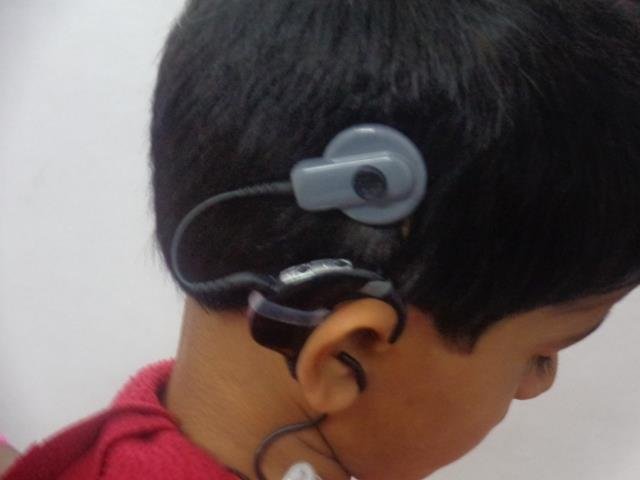
Laying the Foundation: The First Cochlear Implant Program in a Public Teaching Hospital in Karnataka
Some milestones are not just personal achievements — they are turning points for an entire community. Establishing the cochlear implant program at Victoria Hospital was exactly that.
This was not simply the launch of a new surgical service. This was the first cochlear implant program ever established in a public teaching hospital in the entire state of Karnataka — a milestone that carried enormous responsibility, and one that I did not take lightly.
Why Victoria Hospital, and Why It Mattered
Victoria Hospital is one of the oldest and largest government hospitals in Bangalore, serving thousands of patients every single day — the majority of whom come from economically vulnerable backgrounds. Rickshaw drivers, daily wage workers, small farmers, domestic helpers — these are the families who walk through its doors. And hidden among them, quietly, are children who cannot hear. Children who have never known the sound of their mother’s voice. Children whose futures were being shaped — and limited — by a silence that modern medicine can now break.
Cochlear implant surgery had, until this point, been the exclusive domain of private hospitals and elite medical centres. The technology existed. The surgical expertise existed. But access did not — not for those who could not pay. For a family earning a modest income, the cost of a cochlear implant was not just steep. It was simply impossible.
Bringing this program to Victoria Hospital was about dismantling that barrier entirely.
The Weight of Being First
Being first is never easy. When you pioneer something in a setting that has never seen it before, you are not just performing a surgery — you are building everything from the ground up. Infrastructure, sterile surgical environments, audiological testing facilities, a rehabilitation pathway, trained support staff, speech therapists, and a follow-up care system — none of this existed. Every single element had to be conceived, argued for, planned, and put into place.
In a busy government hospital with competing demands on every resource, this required not just surgical skill but relentless persistence. Bureaucratic processes moved slowly. Equipment procurement took time. Convincing administrators to allocate dedicated space and resources for a program they had never seen before required patience, evidence, and an unwavering belief in what this work could mean for the children of Karnataka.
The Sceptics Were Loud
And then there were the doubters — and there were many.
The moment word spread that cochlear implant surgery was being planned at a government hospital, the scepticism was immediate and vocal. “Can a public hospital really handle this?” was the most polite version of what was being said. Others were more blunt — questioning whether the surgical environment would be safe, whether infection rates would be acceptable, whether the outcomes could possibly match those of private institutions.
Cochlear implant surgery is among the most delicate procedures in ENT — it involves implanting a sophisticated electronic device directly into the inner ear, millimetres from critical structures. The margin for error is extraordinarily small. Critics argued that the infrastructure of a public hospital — however well-intentioned — could not meet the stringent standards this surgery demands. Concerns about post-operative infection, about sterility, about the availability of dedicated intensive monitoring, were raised repeatedly.
These were not trivial concerns. I understood them. But I also knew that with the right protocols, the right team, and the right standards of surgical discipline, there was no reason why a public hospital could not deliver outcomes that stood proudly alongside any private centre. The question was never whether it could be done. The question was whether someone was willing to do the hard work to make it happen.
We were.
Every surgical protocol was designed and followed with zero compromise. Infection control measures were implemented with the same rigour you would find in the most advanced private institutions. The results spoke for themselves — and the sceptics, over time, fell quiet.
A Meeting That Could Change Everything
During this period, I had the distinct honour of meeting with the then Honourable Health Minister of Karnataka. This was not a courtesy call. I came prepared — with data, with patient stories, with the surgical evidence, and with a very clear message: hundreds of children in Karnataka are living in silence not because a cure does not exist, but because their families cannot afford it.
The Minister listened carefully. And he made a commitment — to seriously explore government funding for cochlear implants, so that a child’s ability to hear would no longer depend on their parents’ bank balance. It was a moment of genuine hope, and one that gave the entire program a new sense of purpose and momentum.
The Trust That Made It Possible
What made this program possible — what gave the hospital administration, the government, and ultimately the families the confidence to say yes — was trust. Trust built over years of surgical training, international exposure, and a track record of outcomes that could be scrutinised and verified.
For a public teaching hospital to open its doors to a procedure of this complexity and this consequence, it needed to believe in the person leading it. That trust was not given — it was earned. And it came with a profound sense of obligation to every child whose hearing, whose language, whose future, would pass through that operating theatre.
What This Means for Families Who Could Never Afford It
Let us be clear about what cochlear implantation means in practical terms for a family of modest means.
Without intervention, a child born with profound hearing loss faces a future of isolation from spoken language, significant barriers to mainstream education, limited career pathways, and a lifetime of dependence on others for communication. The emotional and economic burden on families is immense.
With a cochlear implant, fitted early enough and supported with proper rehabilitation, that same child can learn to speak. They can attend a regular school. They can have a conversation, make friends, follow their ambitions. The trajectory of their entire life changes.
For families in Karnataka who had watched their child grow in silence, knowing the solution existed but was beyond reach — this program represented something they had almost stopped hoping for. Access. Equity. A fighting chance.
The Fruits of Persistence
The years of advocacy, the workshops, the awareness campaigns, the seminars and the meetings paid off in the most meaningful way possible. Cochlear implants are now government-funded in Karnataka, and approximately 500 children are set to receive life-changing surgery — surgery that will open up the world of sound, language, and possibility to them.
Five hundred children. Five hundred families. Five hundred futures, rewritten.
The stories of transformation that have already emerged from this program — children hearing their parents’ voices for the first time, saying their first words, laughing at sounds they never knew existed — are a reminder of why every challenge, every sceptic, and every bureaucratic hurdle was worth facing.
The Work Continues
This milestone is not a conclusion — it is a foundation. There are still children who are not reached, families who do not know that help is available, and gaps in the rehabilitation support that follows surgery. The work of building a truly equitable hearing healthcare system in Karnataka is ongoing.
But what began with a single program, in a public hospital that had never seen this surgery before, driven by a belief that every child — regardless of what their family earns — deserves to hear, has already changed hundreds of lives.
And that is only the beginning.