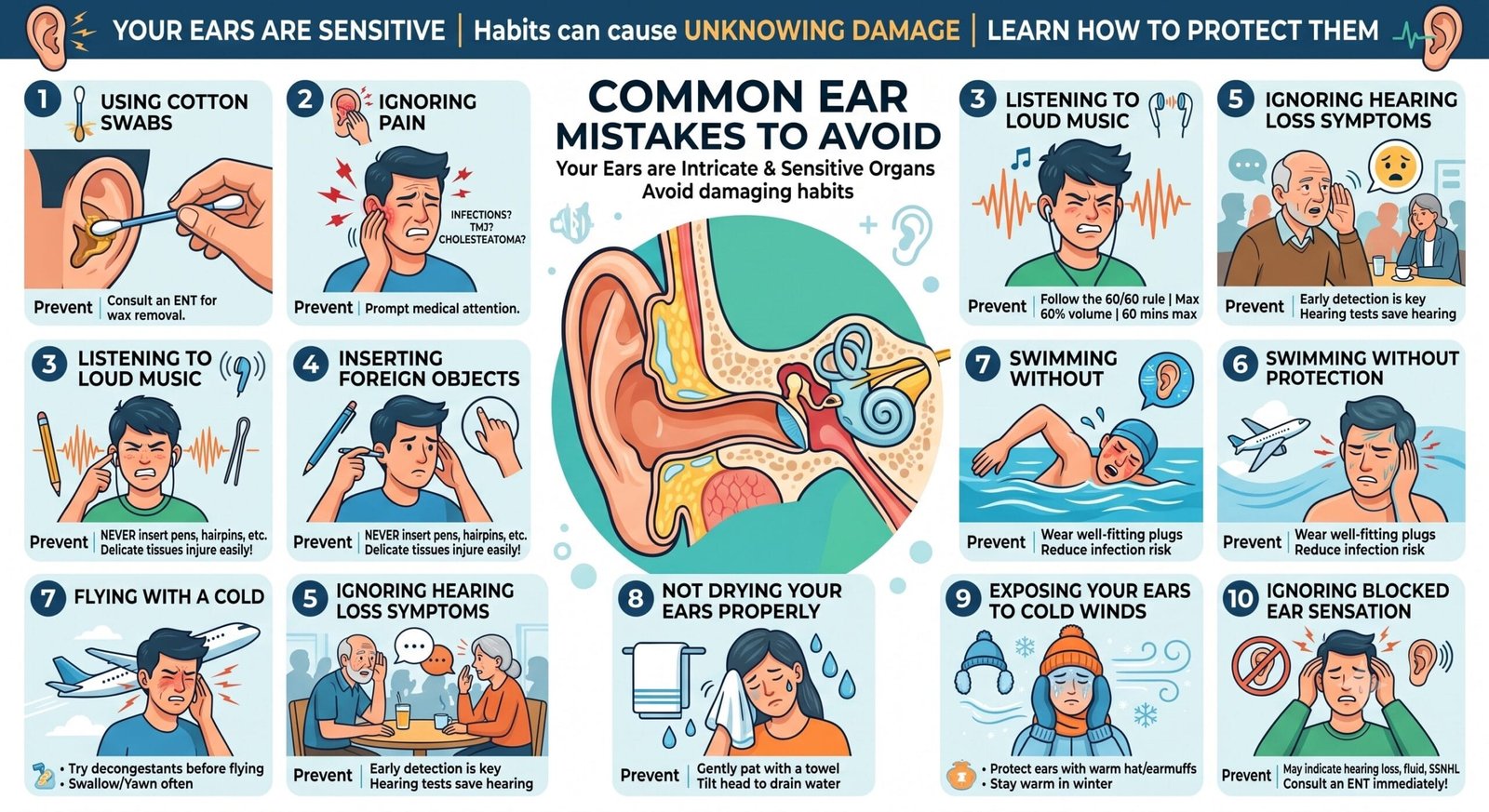
Common Ear Mistakes to Avoid
Your ears are intricate and sensitive organs that play a vital role in hearing and balance. However, many common habits could be unknowingly damaging them. Here are 10 surprising mistakes you might be making with your ears—and how to avoid them.
1. Using Cotton Swabs
One of the most widespread ear-care myths is that cotton swabs (or Q-tips) are the best tool for cleaning out earwax. In reality, inserting swabs to clean can push wax deeper, causing impaction, irritation, or even perforating the eardrum. If wax buildup is bothersome, see an ENT specialist for proper removal techniques like irrigation or microsuction.
2. Ignoring Pain
Ear pain isn’t just an inconvenience—it can be a red flag for various conditions like ear infections, temporomandibular joint (TMJ) disorders, or even something more serious like cholesteatoma (an abnormal skin growth in the ear). Chronic pain requires prompt medical attention to prevent long-term damage. Don’t brush off discomfort as something minor.
3. Listening to Loud Music
Regular exposure to loud music, particularly through earbuds or headphones, can damage the sensitive hair cells, leading to permanent hearing loss. The 60/60 rule—listening at no more than 60% of maximum volume for 60 minutes at a time—can help reduce this risk. Over-the-ear headphones are also preferable as they sit further away from the eardrum than earbuds.
4. Inserting Foreign Objects
Whether it’s scratching an itch or trying to clean them, inserting objects like pens, hairpins, or even your fingers is extremely harmful. The delicate tissues are easily injured, leading to infections or drum ruptures. Avoid introducing foreign objects into them.
5. Ignoring Hearing Loss Symptoms
Hearing loss doesn’t always happen suddenly; it often occurs gradually, making it harder to notice. Some warning signs include asking people to repeat themselves, needing the TV volume higher, or finding it difficult to follow conversations in noisy places. Early detection and the use of hearing aids can help preserve hearing and improve quality of life, but ignoring symptoms may lead to permanent loss.
6. Swimming Without Protection
Water trapped in the ear can create a breeding ground for bacteria, leading to conditions like swimmer’s ear (otitis externa). If you swim frequently, wearing well-fitting plugs can keep water out, reducing the risk of infection. After swimming, always dry your ears thoroughly by tilting your head or using a towel to avoid moisture buildup.
7. Flying with a Cold
Flying with a stuffy nose or sinus infection can lead to severe ear pain or “airplane,” as pressure changes during takeoff and landing can block the Eustachian tube. This blockage can cause aches, difficulty hearing, or in extreme cases, even eardrum rupture. To avoid this, try using a decongestant before flying, or swallow and yawn frequently to help equalize the pressure.
8. Not Drying Your Ears Properly
Moisture in the ears, especially after bathing or swimming, can result in infections like otitis externa. Simply letting water sit inside the ear canal can cause fungal or bacterial infections. Gently patting the outer ear with a towel and tilting your head to help drain any water will prevent issues from excess moisture. If water remains trapped, you can try using ear-drying drops available at pharmacies.
9. Exposing Your Ears to Cold Winds Without Protection
Cold weather can negatively affect your ears, leading to pain, discomfort, or even ear infections. Exposure to freezing temperatures and wind can cause painful conditions like frostbite or earaches. Protect your ears with a warm hat or earmuffs when heading out into the cold, especially during the winter months.
10. Ignoring the Feeling of Ear Blockage
Many people disregard the sensation of blocked ears, assuming it’s just due to earwax or temporary congestion. However, a blocked feeling can often be a sign of underlying hearing loss, fluid buildup behind the eardrum (due to infection), or Eustachian tube dysfunction. This condition can also accompany sudden sensorineural hearing loss (SSNHL), which requires urgent treatment. If you frequently experience this sensation or find that it’s accompanied by diminished hearing, muffled sounds, or ringing (tinnitus), consult an ENT specialist immediately. Early intervention can prevent permanent hearing damage.