Thyroid Cancer: What to Know Before You Panic
The word “cancer” changes how you hear everything that follows.
If you’ve been told that a thyroid nodule needs further testing, or the words “thyroid cancer” have already been used, your mind may immediately go to the worst-case scenario.
Here’s the first thing I want you to know:
Most of these cancers are highly treatable, and many patients go on to live normal, healthy lives after appropriate treatment.
That doesn’t mean this disease should be ignored. It means that once a suspicious nodule is identified, there is usually a clear pathway: evaluate the nodule properly, determine whether it is cancer, understand the type and extent of disease, and then choose the treatment that is appropriate for that particular cancer.
And one important reassurance before we go any further:
Not every thyroid nodule is cancer.
Thyroid nodules are extremely common, and the vast majority are benign.
What Is Thyroid Cancer?
The thyroid is a small, butterfly-shaped gland in the lower front of your neck. It produces hormones that help regulate several important functions of the body, including metabolism.
This cancer occurs when abnormal cells in the thyroid grow and divide uncontrollably.
There are four main types:
Papillary
This is the most common type. It generally grows relatively slowly and, when appropriately treated, has an excellent prognosis in most patients.
Follicular
This is the second major type of differentiated thyroid cancer. It is also generally highly treatable, although its behaviour and treatment can differ from papillary cancer.
This develops from the thyroid’s C cells, rather than the follicular cells that give rise to papillary and follicular cancers. Some cases are associated with inherited genetic syndromes, which is why genetic assessment may be important in appropriate patients.
Anaplastic
This is rare but aggressive. It can grow and spread rapidly and requires urgent specialist assessment and treatment.
So when someone says they have been diagnosed, the next question is not simply “How serious is it?”
The important questions are:
What type is it? How large is it? Has it spread? And what does that mean for treatment?
What Increases the Risk of these cancers?
There isn’t one single cause responsible.
Several factors are associated with an increased risk, including:
- Previous radiation exposure, particularly exposure involving the head and neck
- Family history of this cancer
- Inherited genetic conditions, particularly those associated with medullary type
- Age and sex — it is more common in women and is frequently diagnosed during adulthood, although it can occur at any age
- Certain other factors, including body weight and iodine intake, have also been associated with increased risk.
But remember:
Having a risk factor does not mean you will develop this cancer.
And many people diagnosed have no obvious risk factor at all.
What Are the Symptoms?
One of the difficulties with thyroid cancer is that early disease may cause no symptoms at all.
Many are discovered when a thyroid nodule is noticed during examination or imaging performed for another reason.
When symptoms do occur, they may include:
- A lump or swelling in the neck
- A lump that appears to be growing
- Persistent hoarseness or voice change
- Difficulty swallowing
- Difficulty breathing
- Pain in the front of the neck, sometimes extending toward the ears
- Enlarged lymph nodes in the neck
- A persistent cough without another obvious explanation
But there is an important point here:
None of these symptoms automatically means cancer.
Neck lumps, hoarseness, swallowing difficulty and throat symptoms have many benign causes.
The answer isn’t to match your symptoms to an online checklist.
The answer is proper evaluation.
How Is It Diagnosed?
The evaluation usually begins with a combination of clinical examination, thyroid function testing and ultrasound of the thyroid and neck.
- Ultrasound
Ultrasound is one of the most important tests for evaluating a thyroid nodule.
It can determine the nodule’s size and characteristics and can also assess the surrounding thyroid tissue and cervical lymph nodes.
Certain ultrasound features increase suspicion for malignancy and help determine whether a needle biopsy is appropriate.
- Fine-Needle Aspiration — FNA/FNAC
A fine-needle aspiration biopsy uses a small needle to obtain cells from the thyroid nodule for examination by a pathologist.
It is a key part of evaluating many suspicious thyroid nodules.
Depending on the specific result, the next step may include repeat FNA, molecular testing, surveillance or surgery.
- Blood Tests
Thyroid hormone tests help determine how the thyroid is functioning.
In selected situations, additional blood tests such as calcitonin may be relevant, particularly when medullary thyroid cancer is suspected.
Blood tests alone, however, cannot diagnose most thyroid cancers.
- Additional Imaging
Not every patient needs extensive imaging.
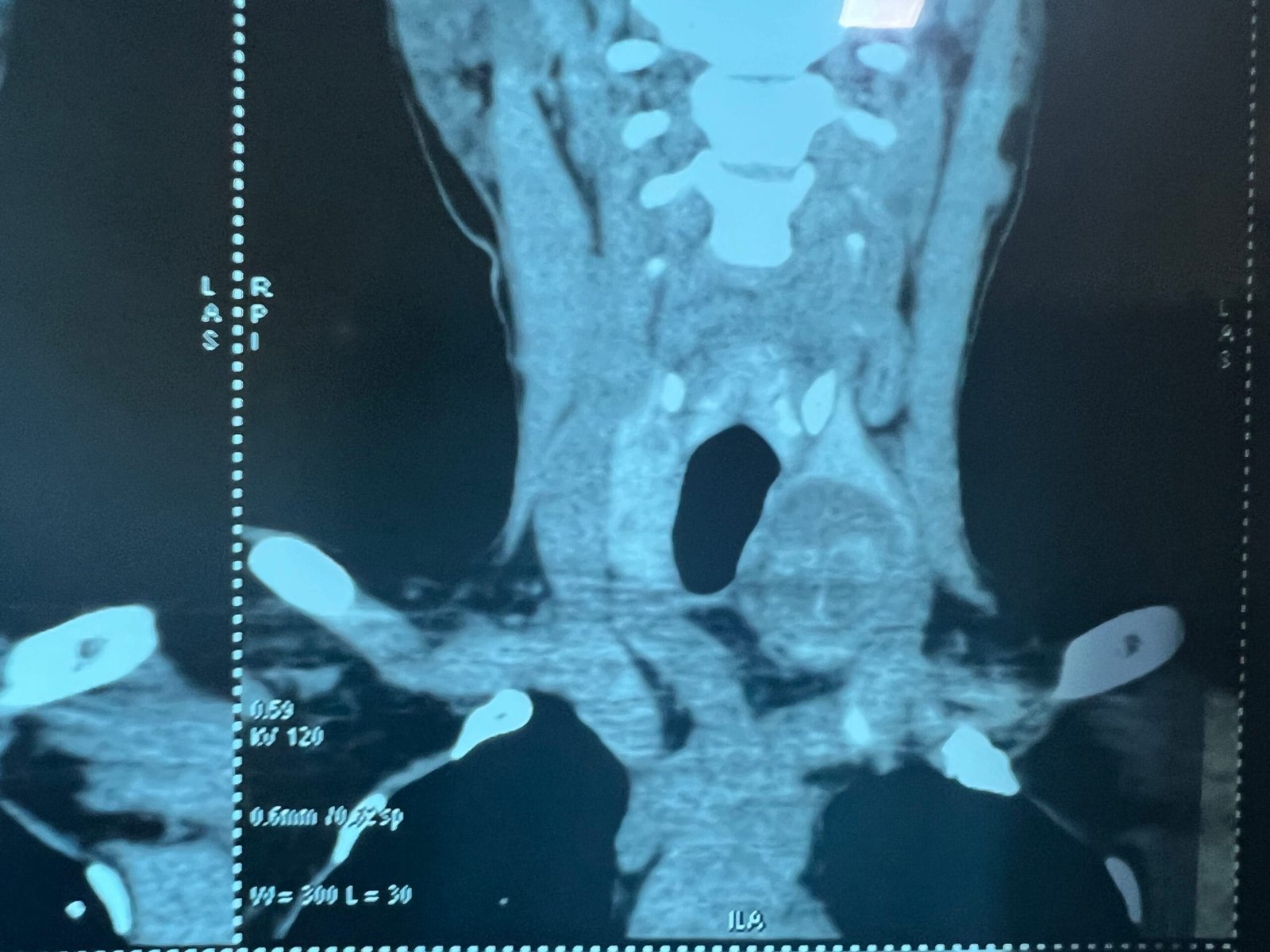
Depending on the suspected cancer, its size, location, lymph-node findings and other clinical features, CT or MRI may be used to define more extensive disease.
Radioactive iodine imaging has a specific role in selected differentiated thyroid cancers rather than being a routine test for every thyroid cancer.
The investigations should be tailored to the individual patient and the suspected disease.
Does Every Cancer Need the Same Treatment?
No.
This is one of the most important things to understand.
Treatment depends on:
- The type
- Tumour size
- Whether the cancer has spread outside the thyroid
- Whether lymph nodes are involved
- Whether there is distant spread
- The patient’s age and overall health
- Other features of the individual cancer
For some carefully selected patients with very small, low-risk papillary cancers, active surveillance may be an appropriate option rather than immediate surgery.
For other patients, surgery is clearly recommended.
The goal is not to give every patient the most aggressive treatment possible.
The goal is to give each patient the treatment that is appropriate for the biology and extent of their cancer.
The Bottom Line
Hearing the words “thyroid cancer” is frightening.
But don’t let the word cancer make you assume the worst before you know the details.
Find out what type it is.
Find out how large it is and whether it has spread.
Understand your treatment options.
And make sure the treatment plan is based on the actual biology and extent of your disease — not fear.
For many patients, it is highly treatable, and the long-term outlook is excellent.
The most important thing is not to panic.
Get the diagnosis right. Understand the disease. And choose the right treatment. And the right specialist.