Medical Tourism in India: A Family’s Experience of Specialist Care
When patients travel away from home for medical treatment, choosing the right doctor is only one part of the decision. They are also placing their trust in a healthcare team they may not know personally.
For international patients and their families, this journey can involve unfamiliar surroundings, difficult medical decisions, concerns about treatment and recovery, and the emotional strain of being away from home.
This is one reason medical tourism is about more than hospitals, technology and medical expertise. The patient experience matters too.
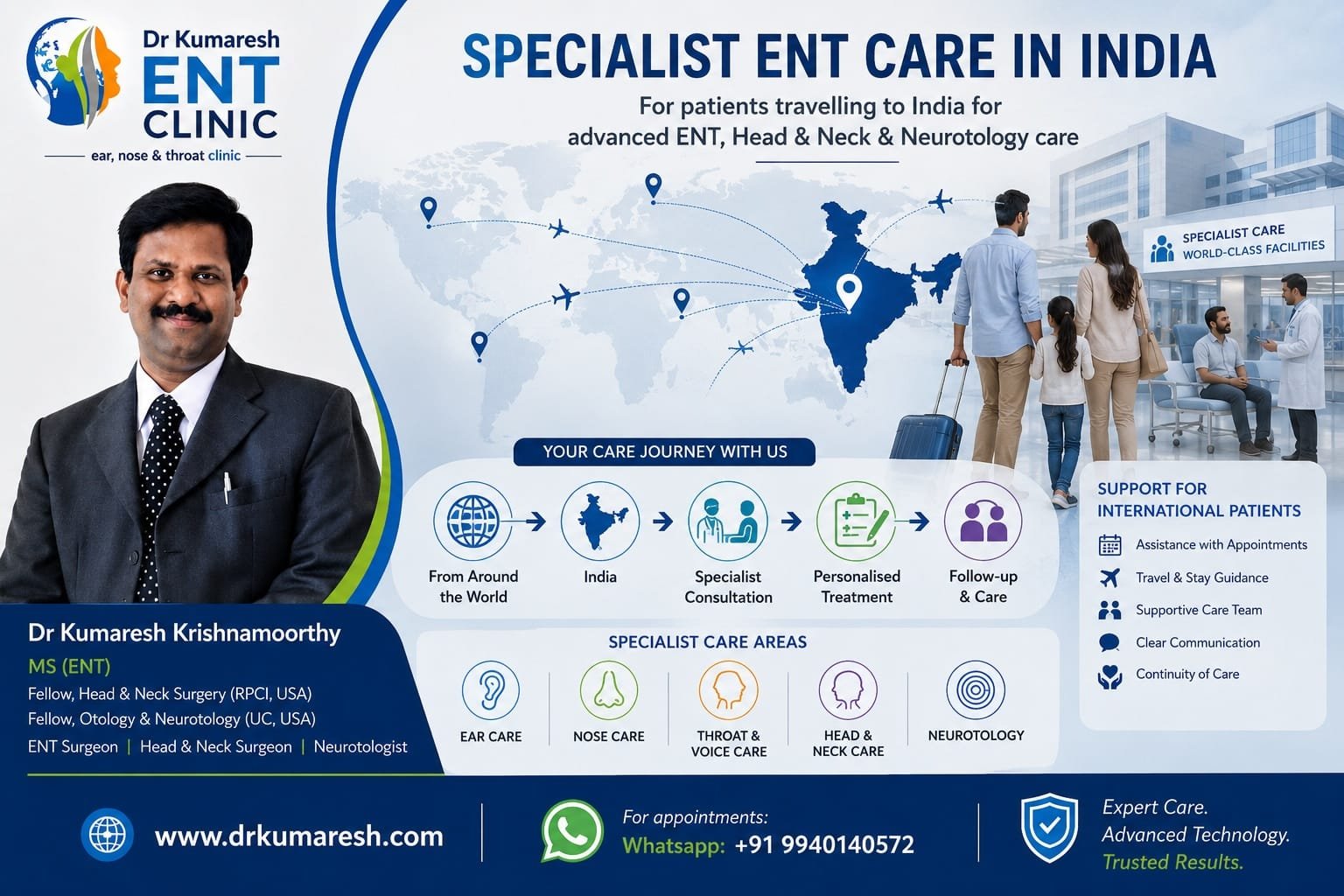
India has increasingly developed its Medical Value Travel ecosystem, with government initiatives aimed at making it easier for international patients to access healthcare. Official government data reports that more than 500,000 foreign nationals arrived in India specifically for medical treatment in 2025.
But statistics cannot describe what the experience actually feels like for a family.
Sometimes, the most meaningful perspective comes from the patient or from someone who was standing beside them throughout the treatment journey.
When a Family Needs More Than Medical Treatment
When a loved one is unwell, family members often carry their own concerns.
They want to understand what is happening. They want their questions answered. They want to know whether the treatment is appropriate and what they can expect next.
For someone receiving treatment away from home, these concerns can become even more significant.
A family may be navigating an unfamiliar healthcare system while simultaneously trying to support the patient emotionally. In such circumstances, communication and accessibility become an important part of the overall experience.
One patient’s husband captured this beautifully in a message following his wife’s treatment.
He wrote:
“I cannot begin to say thank you enough with just words, but I will try.”
His message was not simply about medical treatment. It was about how the family experienced the care they received.
The Importance of Clear Communication
One of the first things he appreciated was the time taken to explain his wife’s condition.
He wrote that her condition had been fully explained and that their comments and questions were listened to “with genuine interest.”
For families seeking specialist treatment, this can make an enormous difference.
Medical terminology can be difficult to understand, particularly when a family is already worried. Taking time to explain the condition, discuss the available approach and answer questions can help families participate more confidently in the treatment journey.
Good communication does not replace medical expertise. It complements it.
Caring for the Family Alongside the Patient
The patient’s husband also highlighted something that is sometimes overlooked in healthcare: the family member is experiencing the situation too.
He specifically appreciated the respect and attention given not only to his wife, but also to him as her husband.
He wrote:
“The respect and attention you gave to not only my wife as the patient but to me as her husband… was superior.”
This is particularly relevant when considering medical tourism.
A patient may be the person receiving treatment, but family members often travel with them, help make decisions, provide emotional support and remain involved throughout recovery.
For that reason, a patient-centred approach naturally extends to respectful communication with the family.
Consistency During Difficult Days
Medical treatment does not always follow a smooth or predictable emotional journey.
There can be good days and difficult days. There can be moments of frustration, uncertainty and fear.
The family member who wrote this testimonial remembered the consistency of the care even during those difficult moments.
He described a level of care that remained evident despite the challenges they were facing. For him, that consistency provided reassurance that his wife was in the right place and in the right hands.
That is a powerful observation because healthcare is not experienced only during successful or easy moments.
Sometimes, it is during the difficult moments that patients and families remember the most.
Medical Tourism Is Also About Trust
Travelling for medical care requires trust.
A patient may be travelling hundreds or thousands of kilometres to seek specialist treatment. Before making that journey, families may research doctors, hospitals, treatment options and previous patient experiences.
The decision ultimately comes down to confidence: confidence in the expertise, the healthcare environment and the people providing the care.
India’s Medical Value Travel framework increasingly recognises the importance of a coordinated patient journey, including access to healthcare providers and support services for international patients.
But the human side of healthcare cannot be reduced to a system or a process.
Trust is built one conversation at a time.
A Family’s Words That Remain Meaningful
Towards the end of his message, the patient’s husband expressed his appreciation for everyone involved in his wife’s care.
He wrote:
“Thank you for being so patient even with me. It made a difference.”
That sentence perhaps captures the entire experience better than any description of medical infrastructure could.
For a family going through a difficult medical situation, being treated with patience and respect can provide reassurance at a time when they need it most.
He also thanked the entire team involved in his wife’s care and acknowledged the kindness shown to him throughout their experience.
Beyond the Treatment
Medical tourism is often discussed in terms of specialist expertise, technology, infrastructure, accessibility and cost.
All of these factors matter.
But behind every international patient is a person, and very often, a family.
They arrive with questions, expectations and concerns. They leave with an experience that may stay with them long after the treatment itself is over.
This testimonial is a reminder that specialist healthcare is not only about treating a condition. It is also about helping patients and families navigate a difficult period with clarity, dignity and compassion.
For me, messages like this remain deeply meaningful because they remind us why medicine is ultimately a human profession.
The treatment may be the reason a patient comes to us. The way we care for them and their family is what they may remember long afterwards.
This testimonial was originally received in 2010 and has been edited for readability while retaining the patient’s original sentiment. Published with appropriate permission.