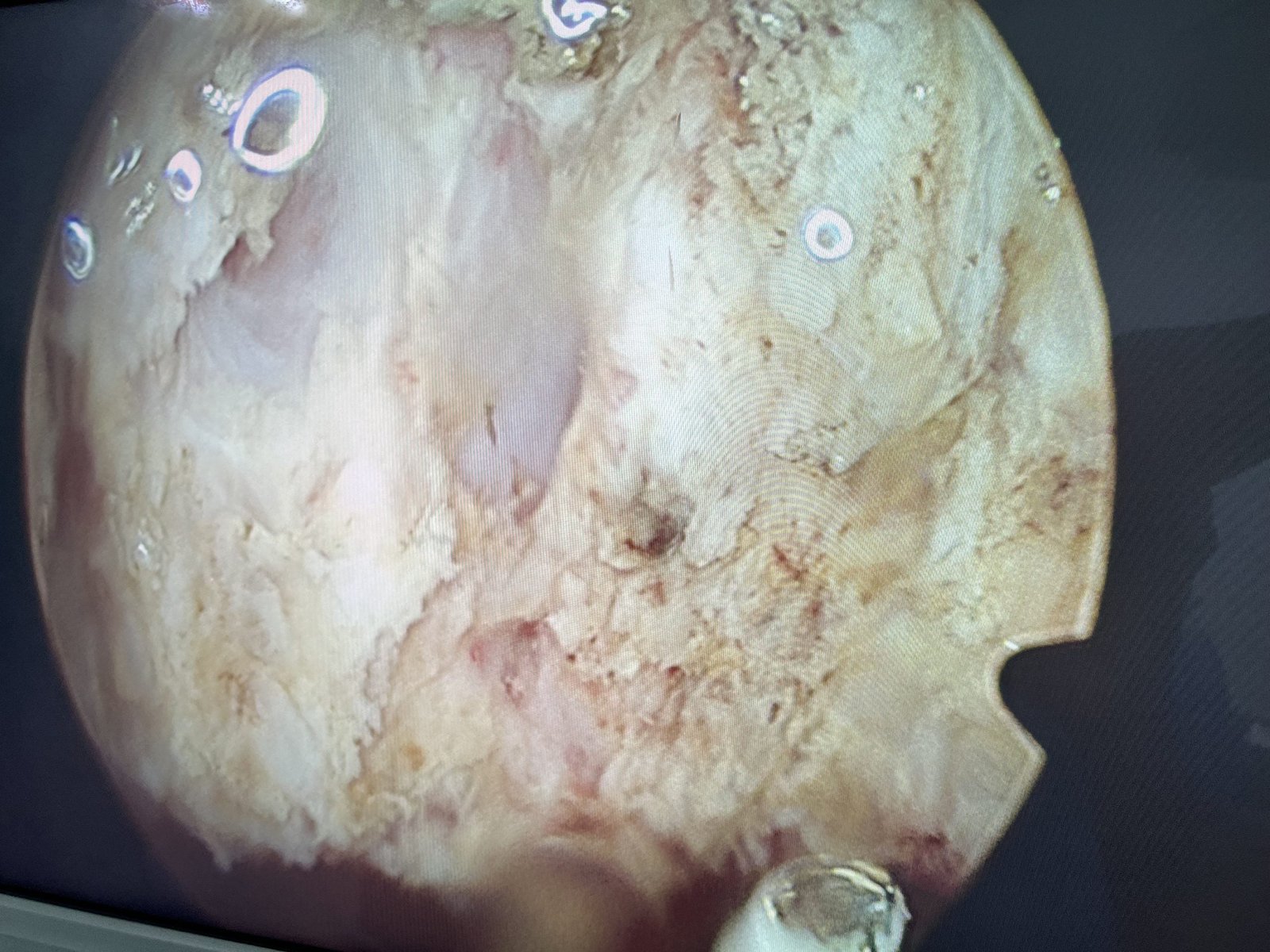
Adenoid surgery: Should You Operate, or Wait?
If your child has been told the adenoids are enlarged, the question that follows is almost always the same:
Sometimes the answer is surgery.
Sometimes the right answer is to watch and wait.
This piece is about how that decision is actually made — not by the size of the adenoids, but by what they’re doing to your child.
The question isn’t “are they enlarged?”
A child can have enlarged adenoids and have very few symptoms.
Another child with a similar degree of enlargement may have significant nasal obstruction, disturbed sleep or ear problems.
So I don’t treat an X-ray, endoscopy finding or a grading number in isolation.
I treat the child and the problem the adenoids are causing.
The better question is never “are the adenoids enlarged?” It’s:
“Are the adenoids causing a clinically important problem — right now, for this child?”
What about the grading — Grade 1, 2, 3, 4?
Parents are understandably drawn to the grading. Grade 4 sounds frightening.
But a grading system simply describes the degree of obstruction. It does not mean:
Grade 1 = no surgery. Grade 2 = maybe. Grade 3 = surgery. Grade 4 = definitely surgery.
That’s not how the decision works.
A child with significant symptoms may need treatment even when the grading isn’t the highest. A child with marked enlargement but minimal symptoms may sometimes be observed.
We don’t operate on the grade. We operate because the child has a problem that the adenoids are causing.
Does every child with enlarged adenoids need adenoid surgery?
No.
If a child has enlarged adenoids but is breathing comfortably through the nose, sleeping well, has no significant ear problems and has no other important symptoms attributable to the adenoids, surgery may not be necessary.
Children grow, and lymphoid tissue changes with age. In selected children with mild symptoms, observation can be reasonable.
But observation should not mean “ignore it and hope for the best.” It means monitoring the child and reassessing if symptoms persist, worsen, or new problems develop.
Can we try treatment without surgery first?
Depends on what’s actually driving the symptoms.
If nasal symptoms relate to allergic rhinitis or inflammation, appropriate medical treatment may help — measures such as saline nasal irrigation and, when indicated, an intranasal corticosteroid spray. These may reduce nasal inflammation and, in some children, reduce symptoms associated with adenoid enlargement.
But there’s an important distinction: medical treatment does not physically remove a severely obstructing adenoid.
If a child has persistent mechanical obstruction despite appropriate medical treatment, continuing medicines indefinitely may not solve the underlying problem. That’s when the situation needs to be reconsidered.
Is it OK to just wait for the adenoids to shrink?
This is where parents need a balanced answer.
Adenoid tissue changes as children grow, and some children with mild symptoms improve with time. So waiting can be appropriate in the right child.
But if the child has persistent significant nasal obstruction, disturbed sleep, obstructive sleep apnea, persistent ear problems, or other consequences of adenoid obstruction, simply waiting for the tissue to shrink may mean allowing the problem to continue.
The question shouldn’t be “will the adenoids eventually get smaller?” It should be:
“What is the effect of this obstruction on the child today, and is there a reasonable treatment that can improve it?”
That’s why persistent symptoms deserve reassessment, not indefinite waiting.
When is it time to seriously consider adenoid surgery?
Adenoidectomy may be considered when the adenoids are causing significant or persistent problems such as:
- Persistent nasal obstruction
- Significant mouth breathing
- Sleep-disordered breathing (see my separate piece on sleep apnea in children for that specific picture)
- Persistent or recurrent problems attributable to enlarged or chronically diseased adenoids
- Eustachian tube or middle-ear problems in appropriately selected children
The decision depends on the child’s symptoms, examination, duration of the problem, associated conditions, and response to appropriate medical treatment.
The size of the adenoids matters, but size alone is not the entire decision. A very large adenoid with few symptoms is a different clinical picture from a moderately enlarged adenoid causing significant sleep or ear problems.
So — operate, or wait?
Here’s the simplest way I’d put it to a parent:
If the adenoids are enlarged but not causing a significant problem, you may not need surgery.
If the adenoids are causing persistent symptoms or complications, treatment shouldn’t be delayed simply because the child might eventually outgrow the problem.
Medical treatment may be appropriate in selected children, particularly when inflammation or allergic disease is contributing. But when significant obstruction persists despite appropriate management, adenoidectomy may be the most effective way to remove the physical obstruction.
The bottom line
Not every enlarged adenoid needs surgery.
But significant, persistent obstruction shouldn’t simply be ignored in the hope the child will grow out of it.
The decision is based on the child’s symptoms, sleep, breathing, ears, hearing, associated conditions, and response to appropriate treatment — together with the clinical assessment of the adenoids. It’s never based on the grading number alone.
If your child’s tonsils are also enlarged, that’s a separate decision with its own criteria — see “Grade 4 Adenoids: Why I Don’t Automatically Remove the Tonsils Too.” And for what to expect physically after surgery, see the post-op recovery guide.