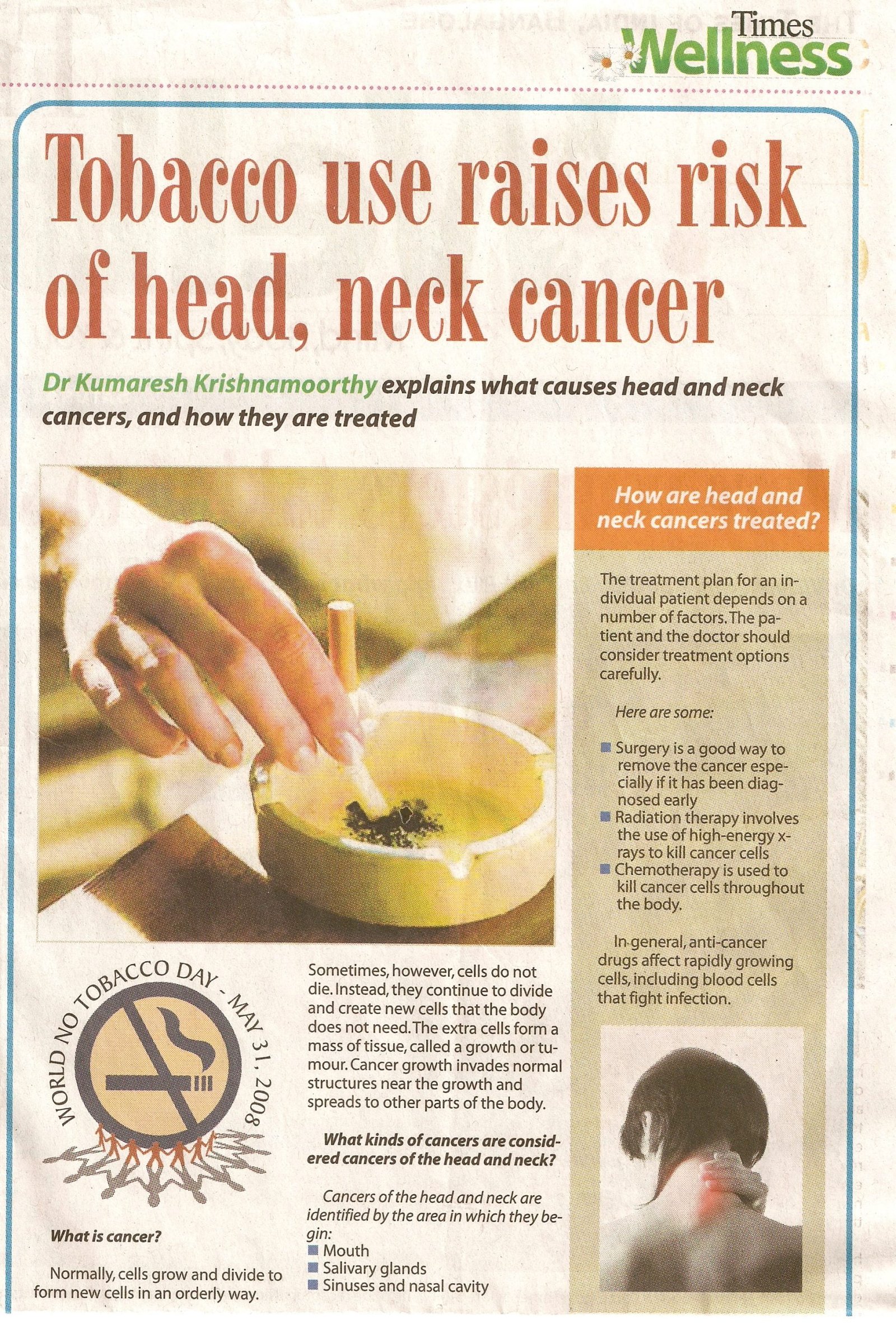
Floor of Mouth Cancer Treatment: A Life-Saving Recovery
Testimonial, shared in the patient’s own words
Some cancer diagnoses arrive with a warning. Others show up disguised as something far more ordinary — in this case, a mouth ulcer that simply wouldn’t heal. What follows is one patient’s account of being diagnosed with floor of mouth cancer while working abroad, and the treatment that ultimately saved his life.
At the time, Mr. G was working in Phnom Penh, Cambodia, dealing with recurring mouth ulcers that weren’t responding the way ordinary ulcers should. Rather than wait until his next trip home, he reached out in advance:
“I was suffering from recurrent Mouth Ulcers and contacted Dr. Kumaresh from Phnom Penh, Cambodia (where I was working) by Phone and eMail and set up appointment to meet him as soon as I reached India. The moment I came to India and met him, he immediately identified my problem and on the same day Biopsy and CT Scan were done. On receipt of results, PET Scan was done to confirm Cancer in floor of mouth.”
This is often how floor of mouth cancer presents — as a persistent ulcer or sore rather than an obvious mass, which is exactly why a diagnosis that seems delayed at first can still be treated aggressively and quickly once confirmed. In Mr. G’s case, biopsy, CT and PET imaging were completed within days of his return to India, leaving no time lost between suspicion and confirmation.
What followed was a major reconstructive surgery, not a simple excision:
“He decided it was best to operate and remove the Jaw bone, Floor of mouth, part of tongue and some Lymph nodes in the left side of my face and replace the same with my Fibula (from Leg) and connected tissues and skin. He immediately identified one of the best Plastic Surgeons and the surgery was done with in a week in xxxxxxx Hospital, Bangalore. He recommended Post operative Radiotherapy and Chemotheapy to be done in xxxxxx Hospital.”
This kind of surgery — removing part of the jaw bone and floor of the mouth, then reconstructing it using bone taken from the patient’s own fibula — is one of the more demanding procedures in head and neck oncology. It isn’t a single surgeon’s job. It requires close coordination between a head and neck surgeon and a plastic and reconstructive surgeon, timed tightly enough that reconstruction happens in the same operation as tumour removal, followed by radiotherapy and chemotherapy to reduce the risk of recurrence.
Mr. G’s letter continues past the surgery itself, into recovery:
“Now I am substantially recovered from my surgery and am cured of Mouth Cancer. I am slowly recovering from the side effects of the Raidiation and Chemo Therapies. All through my above ordeal, Dr. Kumaresh stood behind me like a rock and supported me in all my turbulations. Being a He is a good surgeon, a good care giver, very good in planning dfferent stages of treatment, good in identifying the supportive care givers and institutions but above all a very good human being, so much so that, he is now trying to help me find employment in Bangalore as I am not desirous of going back to Cambodia as Medical facilities there are negligible.
DR. KUMARESH IS A GREAT DOCTOR AND I WISH HIM WELL IN ALL HIS FUTURE ENDEAVOURS.”
— With Warm Regards, Mr. G
What makes this account stand out isn’t only the surgery. It’s the coordination behind it — imaging arranged within a day, a reconstructive team identified quickly, and a treatment plan that carried through surgery, radiotherapy and chemotherapy without the patient having to manage those transitions alone. For a patient navigating a cancer diagnosis far from home, that continuity of care often matters just as much as the operation itself.