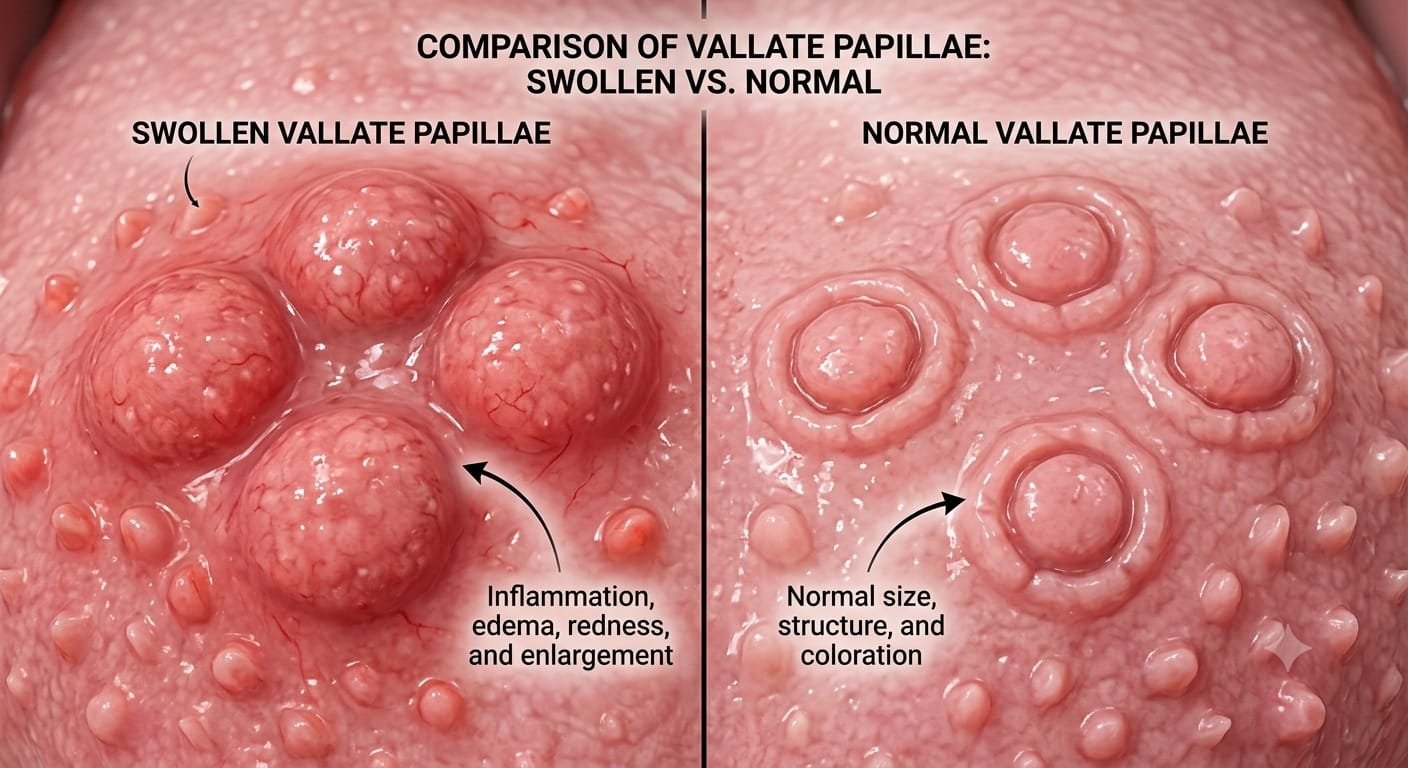
Enlarged Vallate Papillae: Why They Turn Red and How to Treat Them at Home
Catching sight of a large, red bump at the very back of your tongue can be unsettling — especially if you’ve never noticed it before. In most cases, what you’re looking at is simply a swollen vallate papilla (also spelled “circumvallate papilla”), one of the tongue’s normal, built-in structures reacting to everyday irritation. It looks dramatic, but it’s rarely dangerous.
What Are Vallate Papillae?
Your tongue’s surface is covered in small bumps called papillae, and they come in a few different types. Vallate are the largest of the group — usually 8 to 12 of them, arranged in a gentle V-shape near the back of the tongue, close to the throat. Each one is packed with hundreds of taste buds, which is why they’re bigger and more noticeable than the ones scattered across the front and sides of your tongue.
Because of their size and location, they are visible to the naked eye even when they’re perfectly healthy. Many people only discover them for the first time when they’re checking their throat in the mirror — and mistake normal anatomy for something new and worrying.
Why Do they Get Enlarged and Red?
When these tatse strucrures becomes swollen, red, or unusually prominent, it’s typically due to irritation rather than a serious illness. Common triggers include:
- Spicy, acidic, or very hot foods that inflame the sensitive tissue at the back of the tongue
- Minor injuries, like accidentally biting or scraping the area while eating or talking
- Smoking or alcohol use, which can irritate the mouth’s lining
- Stress, which is often linked to a condition called transient lingual papillitis, sometimes nicknamed “lie bumps”
- Acid reflux, where stomach acid irritates the back of the throat and tongue
- Viral infections, such as a cold or sore throat, which can cause temporary swelling
- Dehydration or poor oral hygiene, which allow irritants and bacteria to linger longer on the tongue
In most of these cases, the swelling is your tongue’s response to something — not a sign of disease.
Why People Mistake It for Something Serious
These structures get mistaken for tumours, oral cancer, or throat infections surprisingly often, and there are a few understandable reasons why:
- They’re big to begin with. Even at their normal size, vallate papillae can look like unusual growths to someone seeing them for the first time.
- Redness and swelling look alarming. A single papilla flaring up can appear as an isolated red lump, which naturally triggers worry.
- Location plays tricks on the mind. Because they sit near the throat, people associate that area with more serious conditions.
- Online searching amplifies anxiety. A quick search for “red bump back of tongue” often surfaces cancer-related results before benign explanations, feeding health anxiety.
- They come and go unpredictably. A papilla that swells one day and shrinks the next doesn’t fit the mental picture of “normal,” even though this fluctuation is typical.
When to See a Doctor
While most cases resolve on their own, it’s worth getting checked if you notice:
- Swelling or bumps that last longer than two weeks
- Rapid growth or spreading to other areas
- Persistent pain, bleeding, or trouble swallowing
- Unusual color changes (white patches, unexplained discoloration)
- Recurring episodes with no clear trigger
These signs don’t automatically mean something serious, but a professional exam can rule out infections, autoimmune conditions, or other issues that need treatment.
How to Soothe Enlarged Vallate Papillae at Home
For the more common, mild cases, simple home care is usually enough to bring things back to normal:
- Rinse with warm salt water. Dissolve about half a teaspoon of salt in a glass of warm water and rinse for 30 seconds, two to three times a day. Salt water is gently antibacterial and helps reduce swelling.
- Avoid irritating foods and habits. Steer clear of spicy, acidic, extremely hot, or crunchy foods until the area calms down. Cutting back on alcohol and tobacco helps too.
- Stay well hydrated. Drinking plenty of water keeps the mouth moist and helps flush away irritants that could be prolonging the swelling.
- Give it time. Because this swelling is usually the tongue’s normal reaction to irritation, simply resting the area and avoiding further aggravation lets it heal on its own within a week or two.
- Manage stress. Since stress is a recognized trigger for transient lingual papillitis, relaxation techniques or simply reducing overall tension can help prevent flare-ups.