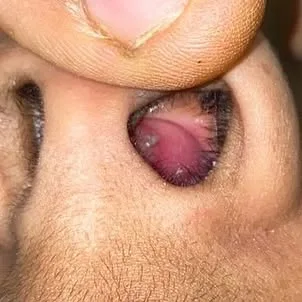
Chronic Nasal Blockage: 7 Problems It Can Silently Cause
If you’ve been breathing through your mouth for months because your nose “just won’t open up,” you’re not dealing with a minor inconvenience. Chronic nasal blockage is your body telling you that air isn’t moving through your nasal passages the way it should — and left unaddressed, it doesn’t stay confined to your nose.
In most cases, the culprit is one of two structures: a deviated septum (the cartilage wall between your nostrils sitting off-centre) or turbinate hypertrophy (the soft tissue shelves inside your nose swelling up). Often, it’s a combination of both — one side blocked by the septum, the other by an over-compensating, enlarged turbinate.
Here’s what prolonged nasal blockage can quietly do to the rest of your body.
1. Disturbed Sleep, Snoring & Sleep Apnea
When you can’t breathe through your nose, you breathe through your mouth — and mouth breathing during sleep is a major driver of snoring. In more severe cases, it contributes to obstructive sleep apnea, where breathing repeatedly stops and starts through the night. The result: poor sleep quality, daytime fatigue, and trouble concentrating, even if you’re technically getting 7-8 hours in bed.
2. Frequent Sinus Infections
Your nasal passages and sinuses are connected. When a deviated septum or enlarged turbinate blocks normal airflow and drainage, mucus stagnates instead of clearing out. Stagnant mucus is an open invitation for infection — which is why patients with chronic nasal blockage often report sinus infections that keep coming back, sometimes several times a year.
3. Headaches & Facial Pressure
A blocked nasal passage changes air pressure and drainage patterns around your sinuses. This commonly shows up as a dull, persistent pressure or ache around the forehead, cheeks, or behind the eyes — often mistaken for tension headaches or migraines when the real source is structural nasal obstruction.
4. Loss of Smell and Taste
Smell depends on air actually reaching the olfactory nerves high up in the nasal cavity. If a deviated septum or swollen turbinate is blocking that airflow, smell — and by extension, taste — can become noticeably dull. Patients often describe food tasting “flat” without realising their nose is the reason.
5. Nosebleeds from Dry, Crusted Nasal Lining
Blocked nasal passages force air to move unevenly, drying out and irritating the lining over the deviation or the enlarged turbinate. This dryness leads to crusting, and crusting leads to nosebleeds — a pattern we see often in patients who’ve had “random” nosebleeds for months with no other explanation.
6. Ear Fullness & Eustachian Tube Problems
The back of your nose connects directly to your ears through the Eustachian tube. Chronic nasal blockage can affect how this tube functions, leading to a sensation of ear fullness, popping, or muffled hearing — symptoms patients frequently bring to an ENT without realising they’re connected to their nose.
7. Impact on Growing Children — Facial and Dental Changes
In children, chronic nasal blockage forcing habitual mouth breathing can influence how the jaw and facial bones develop, and contribute to dental crowding or bite problems over time. Catching and correcting nasal obstruction early matters more in kids than most parents realise.
Is It Your Septum, Your Turbinate, or Both?
Both structures can cause identical symptoms, which is why self-diagnosis rarely works. If you’d like to understand each cause in more depth:
- Read more about deviated septum and why it happens
- Read more about turbinate hypertrophy and its triggers
- Learn about septoplasty as a correction for septal deviation
- Learn about turbinoplasty as a correction for enlarged turbinates
What Not to Do
- Don’t rely on nasal decongestant sprays long-term. Using them beyond 5-7 days can cause rebound congestion (rhinitis medicamentosa), making the blockage worse.
- Don’t assume it’s “just allergies” indefinitely. If allergy treatment isn’t fixing it, the cause may be structural, not allergic.
- Don’t self-medicate with repeated antibiotic courses for “sinus infections” without addressing the underlying blockage.
- Don’t ignore one-sided blockage that doesn’t improve. Persistent one-sided obstruction always needs a proper look.
When to See a Specialist
Book an ENT evaluation if you notice:
- Nasal blockage lasting more than 4-6 weeks despite home care or medication
- Blockage that’s worse on one side, or switches sides
- Snoring, witnessed pauses in breathing, or unrefreshing sleep
- Recurring sinus infections or facial pressure
- Reduced sense of smell or taste
- Unexplained nosebleeds
- In children: visible mouth breathing, snoring, or dental crowding
A simple nasal endoscopy — sometimes supported by a CT scan — can usually confirm within minutes whether the septum, the turbinates, or both are behind your symptoms, and what needs to be done about it.
Dr. Kumaresh ENT Clinic — your trusted partner in Nose and Sinus surgeries, giving patients a second life for the last 20 years.